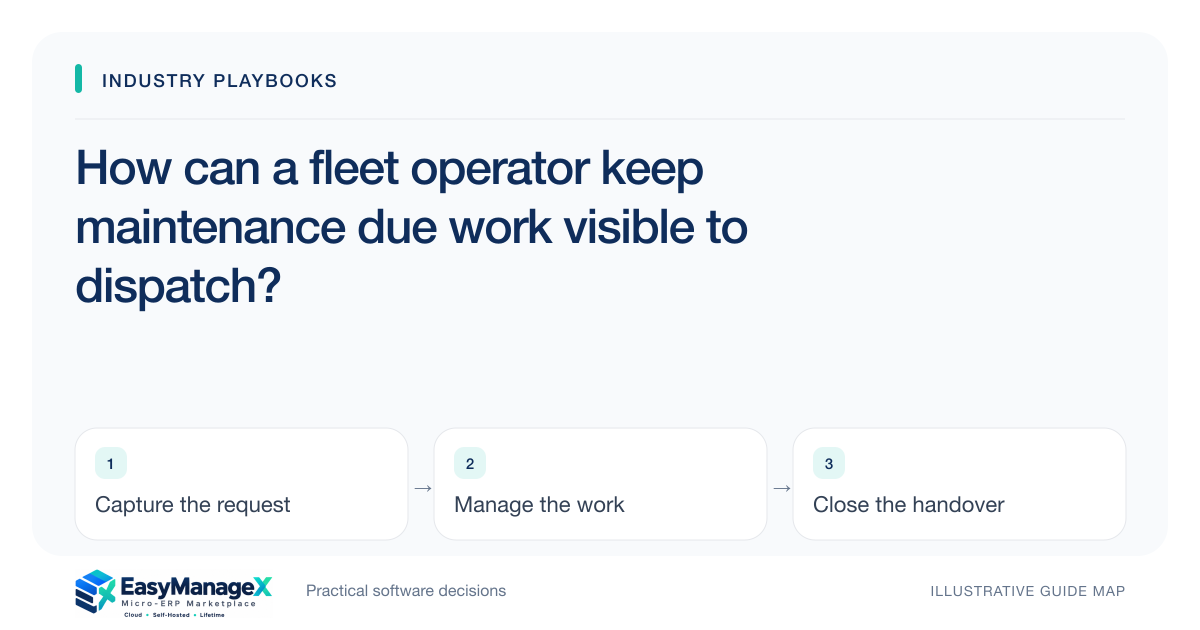
Fleet maintenance planning should connect each vehicle’s identity, due-work inputs and open service records to the dispatch view. Separate a reminder from the authorised availability decision, and assign ownership for missing readings or unresolved work. Dispatch staff need a clear release or hold state with a responsible contact, while technical decisions remain with the appropriate qualified personnel.
- A due-work reminder is not a readiness decision.
- Missing readings require ownership rather than guessed values.
- Dispatch needs the authorised current availability state.
Maintain the vehicle identity and input sources
Use a stable asset identifier alongside the registration or other operational reference staff recognise. Record which readings or dates your maintenance planning process uses and where they come from. A number copied from an old trip sheet should not appear identical to a recently confirmed reading.
Mark uncertain or missing inputs explicitly. The maintenance owner can then obtain the appropriate information under the fleet’s established process. Guessing a value to clear an overdue flag creates a misleading record and makes later service planning harder to explain.
Separate scheduled work from active exceptions
A planned maintenance task has a due basis and owner. An active issue report may require a different review and availability decision. Keep them connected to the same vehicle without combining every event into one generic service date that dispatch cannot interpret.
Use the fleet’s approved technical procedures and qualified personnel for maintenance scope and readiness decisions. The register can record the authoritative outcome and relevant work reference. It should not derive technical safety from a calendar colour or an automatically completed task.
Give dispatch an actionable view
Dispatch needs to see vehicles available, reserved, on hold or awaiting an authorised release, plus the responsible contact for an exception. Avoid requiring dispatchers to interpret detailed service notes. A clear operational state can prevent a trip plan from overlooking unresolved work.
Availability changes should carry a time and decision reference. If a vehicle returns to hold after being released, preserve both events. Staff can then explain which state applied when a trip was assigned and identify whether the dispatch plan needs review.
Illustrative scenario: a reading arrives late
Imagine a vehicle returns from a trip, but the confirmed maintenance-planning reading has not reached the office. The task owner records the missing input and follows up. Dispatch sees the unresolved review state instead of assuming that the previous reading remains current.
After the appropriate personnel review the new input and service records, an authorised availability decision is recorded. This illustrative scenario concerns information and ownership; it does not specify maintenance intervals, mechanical procedures or whether a particular vehicle is safe to operate.
Reconcile completed work with release decisions
Completed supplier work and internal release can be separate events. Record the service reference, returned asset and outstanding review before changing dispatch availability. A supplier document received by the accounts team should not silently substitute for the maintenance owner’s operational decision.
Review overdue tasks by cause: missing input, pending appointment, unresolved work or unrecorded decision. Assign the next action accordingly. This is more useful than repeatedly changing due dates to make a dashboard appear current while the underlying work remains unaddressed.
Evaluate a hold that changes a trip plan
Ask a demonstrator to create due work, flag a missing reading and place the asset on hold before dispatch assigns it. Record service completion and a separate authorised release. Inspect the dispatcher’s account to see whether the relevant state is understandable.
EasyManageX listings are illustrative. Confirm asset history, permissions and dispatch handoffs through evidence using your real references. Start with a small vehicle group and the people maintaining its records, then expand after the input and release responsibilities remain clear through a full operating cycle.
Your working checklist
- Define stable vehicle identifiers and reading sources.
- Mark missing or uncertain inputs explicitly.
- Separate planned work from active issue reports.
- Assign authorised hold and release roles.
- Expose current availability to dispatch.
- Test service completion without an immediate release decision.
Common questions
Can a calendar reminder determine vehicle readiness?+
A reminder indicates that a planning review or task is due. Readiness should follow the fleet’s authorised process and qualified technical personnel. The software can preserve that decision and make it visible to dispatch, but it should not manufacture a safety outcome from a date.
What should we do with a missing reading?+
Record the missing input and assign a person to obtain or verify it through the established process. Keep the uncertainty visible to the maintenance owner. Avoid inventing a value or treating an old reading as current simply to complete the service planning form.
Does a supplier invoice close maintenance work?+
The invoice can support a commercial or administrative record, but operational completion and authorised release may require separate confirmation. Link the supplier reference to the vehicle and work record. Dispatch should act on the confirmed availability decision rather than infer it from an accounts entry.
Sources and further reading
These primary references explain relevant concepts. Our scenarios and working checklists are original, illustrative guidance.
- ERPNext documentation: Project
Further reading on task tracking and responsible owners; relevant to separating maintenance follow-up from fleet dispatch availability decisions.
Published by EasyManageX as practical, AI-assisted guidance. Examples are illustrative. Confirm software capabilities, licence terms and project-specific requirements before committing. Read our editorial policy.