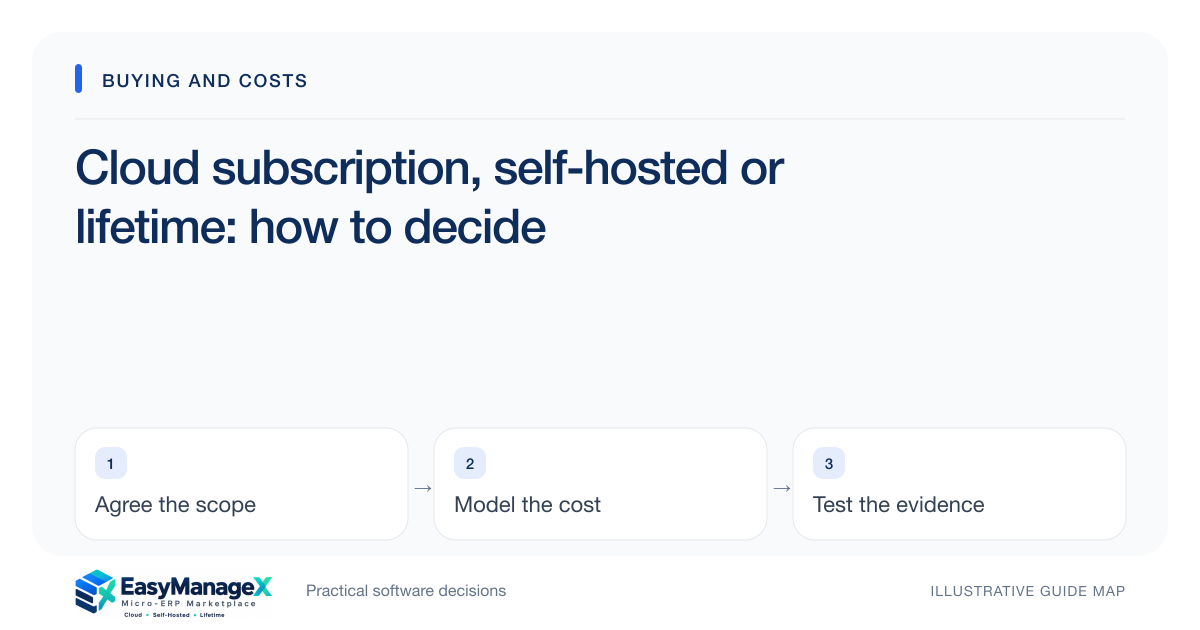
Cloud subscription, self-hosted or lifetime: how to decide
Separate ERP hosting from licence terms, compare responsibility boundaries and model recurring costs before choosing cloud, self-hosted or perpetual use.
Read the guide
Compare scope, cost, ownership and evidence.
Separate ERP hosting from licence terms, compare responsibility boundaries and model recurring costs before choosing cloud, self-hosted or perpetual use.
Read the guide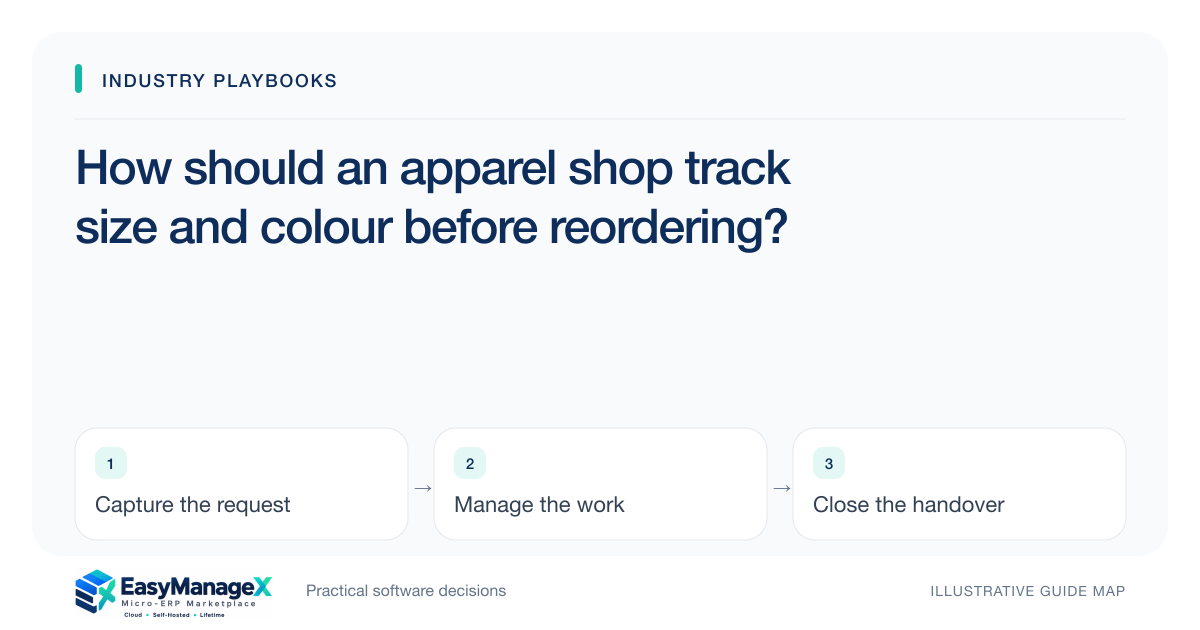
Compare apparel inventory at size and colour level, using usable stock, open reservations and exchange patterns to guide replenishment decisions.
Read the guide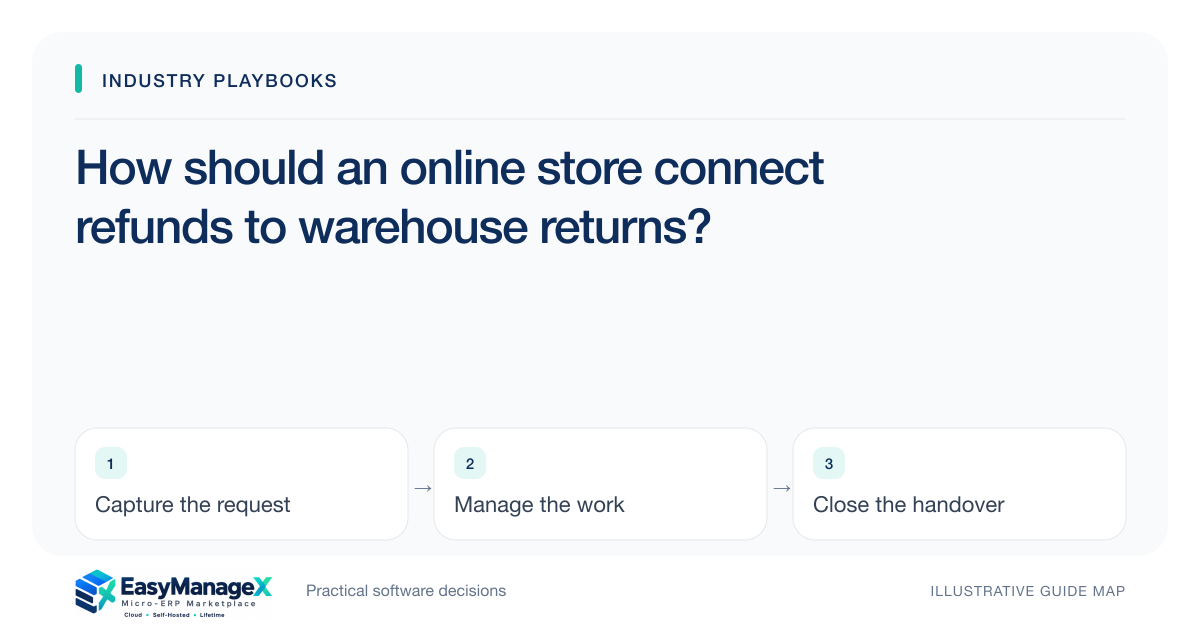
Map e-commerce refund and warehouse return states so order support, carrier updates and inspected stock can be reconciled without duplicate customer remedies.
Read the guide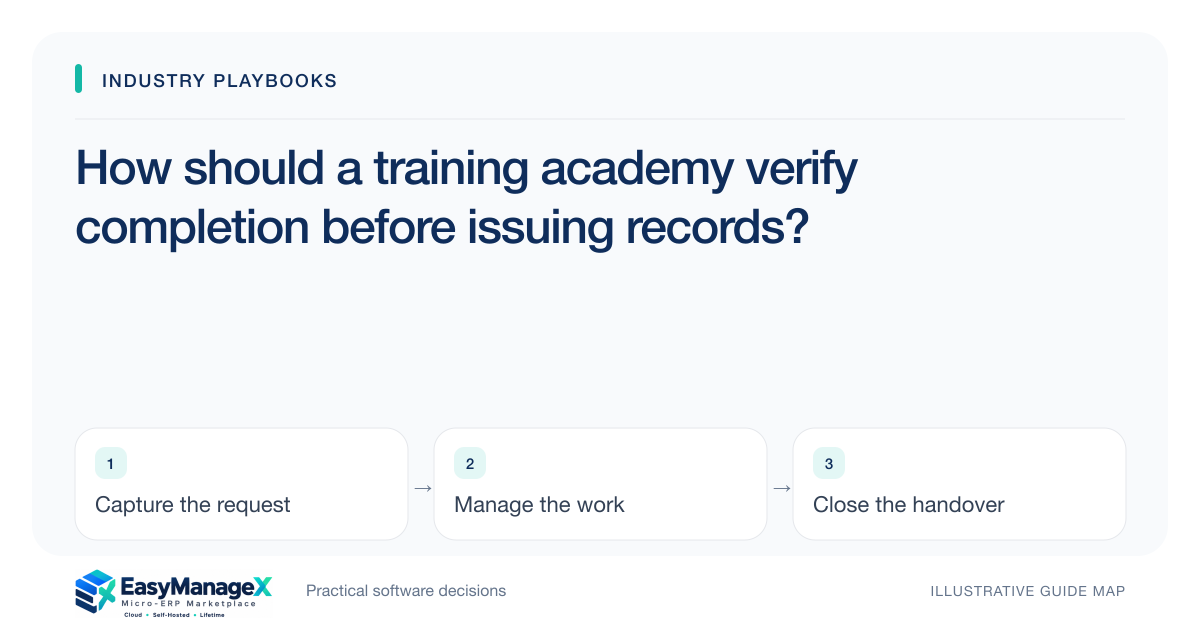
Create a training completion workflow that checks attendance, assessment and missing evidence separately before an authorised person releases a completion record.
Read the guide
Separate cloud-kitchen menu availability from already accepted orders, with station ownership and channel checks when ingredients or preparation capacity change.
Read the guide
Build a manufacturing job-cost review around material issues, recorded work and approved changes, separating estimates from actual operational entries.
Read the guide
Link furniture finish samples, approved specification versions and workshop release decisions so customer revisions do not become conflicting production instructions.
Read the guide
Connect fleet asset records, due-work reviews and dispatch decisions without treating calendar reminders as technical proof that a vehicle is ready.
Read the guide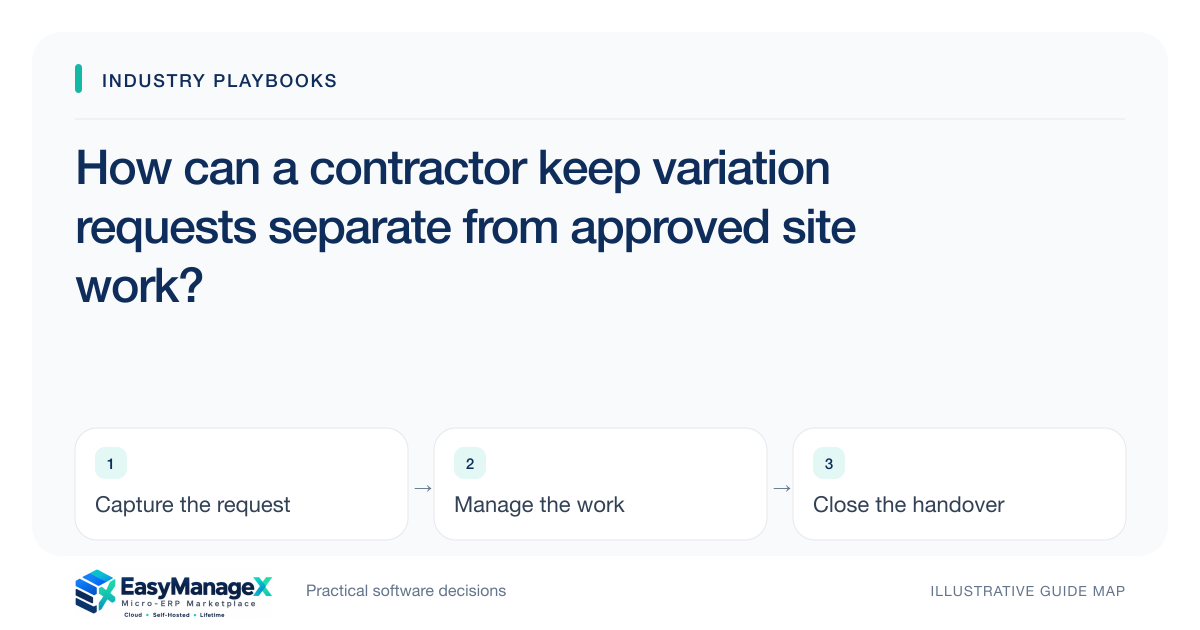
Track construction variation requests, authorised decisions and site instructions as linked records so a customer discussion cannot silently change work already underway.
Read the guide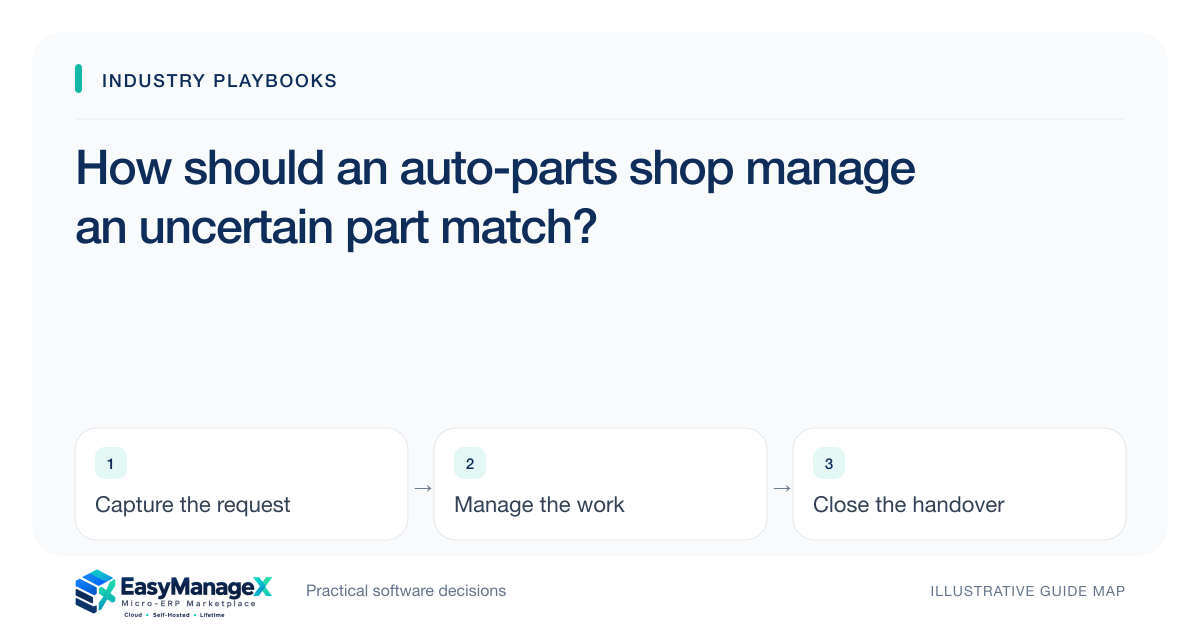
Record auto-parts identification evidence, authorised reference review and special-order decisions without promising compatibility from a product name.
Read the guide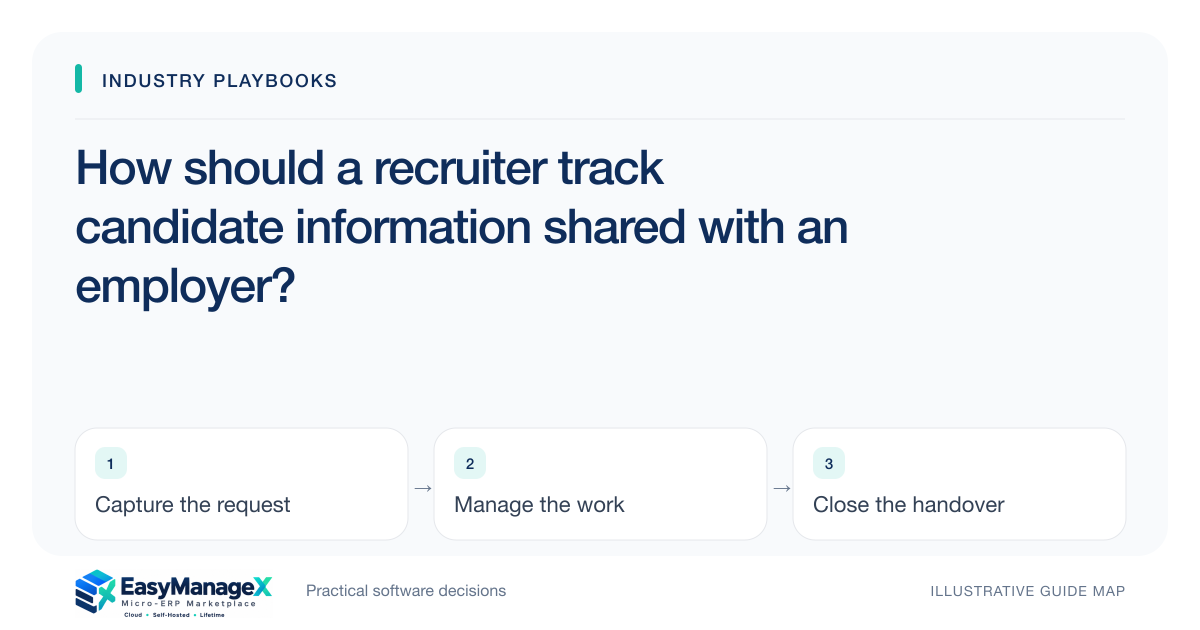
Link recruitment submissions to candidate records, confirmed sharing instructions and employer responses while restricting sensitive information in ordinary vacancy pipelines.
Read the guide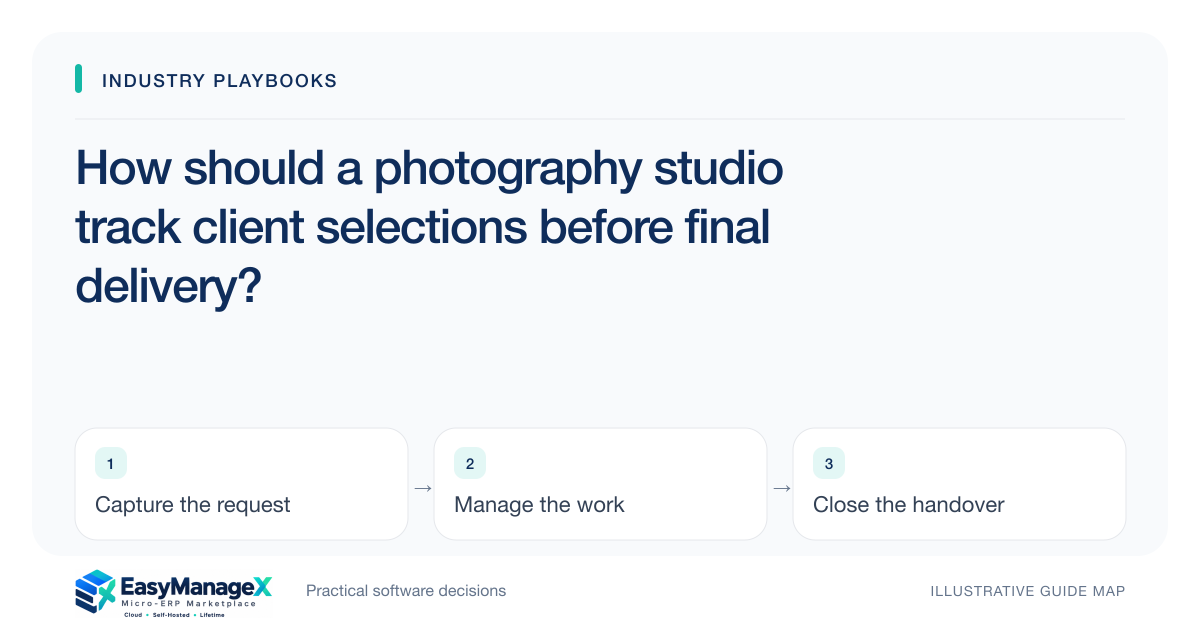
Connect photography selections, editing requests and delivery versions so a client comment cannot silently replace the confirmed set or create unclear revision work.
Read the guide
Define lead ownership, stage evidence, follow-up rules and handoffs before comparing CRM options for a small sales team with overlapping responsibilities.
Read the guide
Connect invoices, receipts, expenses and operational references with a clear reconciliation routine that supports finance review without assuming statutory compliance.
Read the guide
Map project tasks to agreed deliverables, dependencies, acceptance evidence and budget decisions so a task board supports delivery rather than activity reporting.
Read the guide
Define service duration, preparation time, resource availability and booking changes before evaluating appointment software for a busy service business.
Read the guide
Check specifications, material availability, capacity and quality evidence before releasing production jobs, with clear handling for substitutions and rework.
Read the guide
Map joining, dues, access periods, pauses, cancellations and renewal decisions with clear membership states before selecting recurring relationship software.
Read the guide
Design form fields, reviewer responsibility, approval evidence and amendment handling so workflow automation supports understandable decisions and accessible intake.
Read the guide
Define vendor onboarding evidence, approval authority and change verification so supplier records stay attributable as purchasing and payment details evolve.
Read the guide
Review upcoming membership renewals using accepted service periods, payment evidence, plan changes and contact outcomes without confusing reminders with renewal decisions.
Read the guide
Define delivery evidence by shipment, recipient and accepted quantities, with explicit handling for damage, partial delivery and failed attempts at the destination.
Read the guide
Assess requested project changes against accepted scope, cost, dependencies and timing before commitment, with clear decisions and revised delivery boundaries.
Read the guide
Compare business periods with consistent populations, event dates and definitions, while explaining corrections, new branches and incomplete periods before drawing conclusions.
Read the guide
Establish usable team capacity from schedules, commitments, skills and preparation time, then compare demand with realistic availability before assigning additional work.
Read the guide
Compare micro-ERP costs with a three-year worksheet that includes licences, hosting, implementation, internal time, support, integrations and exit expenses.
Read the guide
Evaluate cloud micro-ERP responsibilities for accounts, availability, backups, connectivity and data export before relying on the convenience of hosted access.
Read the guide
Assess self-hosted micro-ERP readiness through server ownership, patching, monitoring, restore tests and support coverage before accepting infrastructure control.
Read the guide
Clarify what a lifetime micro-ERP licence includes, from permitted users and versions to hosting, updates, support and data export, before comparing one-time prices.
Read the guide
Run a focused micro-ERP vendor demonstration using your own records, exception cases and user roles instead of relying on a tour of attractive screens.
Read the guide
Build a concise micro-ERP request for proposal with weighted workflow criteria, evidence requirements, implementation assumptions and clear disqualification gates.
Read the guide
Turn micro-ERP feature claims into testable requirements using workflow evidence, edition checks and explicit limits instead of relying on long capability lists.
Read the guide
Distinguish configuration from custom development in micro-ERP proposals and evaluate upgrade impact, ownership, test evidence and the cost of future changes.
Read the guide
Test micro-ERP exports, attachments and record relationships early so reporting downloads do not get mistaken for a complete migration or usable operational archive.
Read the guide
Plan micro-ERP integrations around record ownership, identifiers, failure recovery and reconciliation before accepting a connector or API as proof of a complete workflow.
Read the guide
Evaluate micro-ERP permissions with a practical task matrix, branch boundaries, restricted exports and approval exceptions before accepting a roles list as sufficient.
Read the guide
Compare micro-ERP support offers through issue ownership, severity definitions, response and recovery expectations, access procedures and practical escalation evidence.
Read the guide
Plan a micro-ERP trial with representative users, realistic records and explicit decision gates so a successful login does not become an untested buying decision.
Read the guide
Compare micro-ERP expansion costs across users, branches, storage and transactions using a labelled growth scenario before choosing a pricing model for today alone.
Read the guide
Read micro-ERP quotes carefully by separating licence units, implementation deliverables, third-party charges and recurring work before comparing headline amounts.
Read the guide
Check micro-ERP workflows on actual checkout, warehouse and field devices with realistic network conditions, accessibility needs and interrupted transactions before launch.
Read the guide
Review micro-ERP outcomes after launch using comparable measures, observed exceptions and ownership costs so improvement decisions follow evidence rather than impressions.
Read the guide