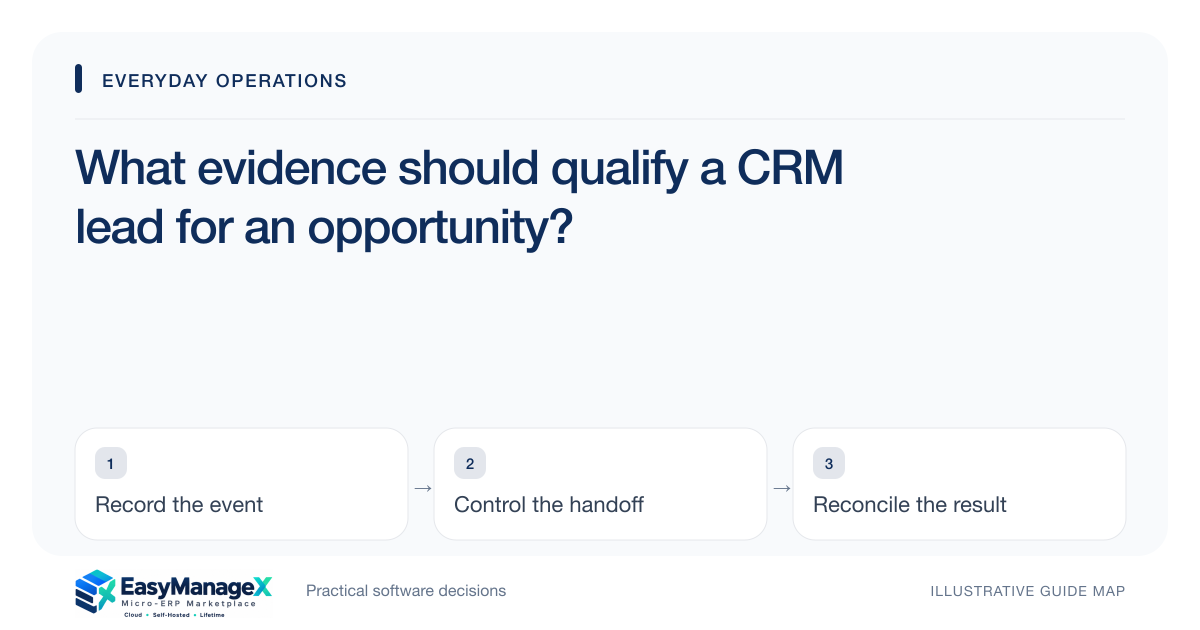
Qualify a lead when you can describe a specific potential purchase, the people involved in deciding it, meaningful timing and an agreed next action. Record uncertainties rather than forcing every enquiry into a yes-or-no score. Qualification should guide the next conversation and resource commitment, not manufacture confidence for a pipeline report.
- Qualify the buying situation rather than the contact alone.
- Record unknowns as questions with owners.
- Require a meaningful next commitment before advancing.
Identify the outcome being sought
Ask what the organisation is trying to change and what a successful result would look like. An enquiry for software may actually concern delayed approvals or duplicate entry. Capturing the operational problem makes the next discussion useful without assuming the initial product request is the complete requirement.
Distinguish a specific buying situation from general interest. Someone researching options can remain a valuable contact without becoming an active opportunity. Define the conversion threshold so staff preserve the enquiry while avoiding inflated current demand.
Understand the decision path
Record who uses the proposed solution, who evaluates it and who can approve the commitment. Those roles may belong to different people. Ask how the organisation expects to review options instead of assuming the initial contact can make the final decision.
Document unknown participants and the plan to identify them. Qualification can be provisional when important details are missing. The record should tell a colleague which conversation will resolve the gap rather than present an unsupported decision-maker label.
Discuss constraints without inventing certainty
Timing, resources, budget and existing systems constrain a potential purchase. Record what the contact actually says, including tentative dates and unconfirmed assumptions. An estimated budget is different from an authorised commitment, and a desired launch date may lack an agreed implementation plan.
Use qualification questions proportionately. A small routine purchase may not justify the same process as a cross-department change. The aim is enough evidence to choose the next action, not an interrogation that collects detail without improving the decision.
Illustrative scenario: a stock-control enquiry
An illustrative wholesaler asks for inventory software because sales cannot trust branch availability. Discovery finds that transfers are recorded late and units differ between locations. The lead record describes those problems and the manager willing to provide sample movements.
The team does not declare the lead fully ready for purchase while finance approval is unknown. Its next commitment is a joint workflow review with the branch manager and finance reviewer. This makes the qualification useful even before every commercial detail is settled.
Choose a consistent qualification outcome
Use outcomes such as ready for scoped evaluation, needs further discovery, future interest or unsuitable under current requirements. Explain the reason and next step. A rejected fit should retain relevant context so another seller does not restart the same unproductive conversation later.
Avoid treating a numerical score as objective evidence unless its inputs and purpose are understood. Scores can support sorting, but staff should still be able to explain the buying situation and uncertainties in plain language.
Review qualification quality over time
Periodically compare qualification records with later outcomes and ask which missing questions created avoidable work. Use that feedback to improve discovery. Do not infer that every loss proves poor qualification; customer priorities and circumstances can change after a reasonable assessment.
Review a few qualified and deferred enquiries with colleagues who did not conduct discovery. They should understand the buying situation and next question from the record. Confirm that the proposed workflow preserves unknowns and evidence rather than forcing sellers to enter guessed amounts or invented decision dates.
Your working checklist
- Write the requested business outcome.
- Identify users, evaluators and approvers.
- Label tentative timing and budget.
- Record missing evidence as questions.
- Agree one concrete next commitment.
- Review qualification gaps after outcomes.
Common questions
Can a lead qualify without a confirmed budget?+
It can qualify for further scoped evaluation if the buying situation and next commitment are credible, but the missing budget should remain explicit. Define the evidence required for your next stage. Do not turn an unconfirmed amount into a forecast merely to satisfy a mandatory CRM field.
Should lead scoring replace discovery?+
No. A score may help prioritise attention, but it cannot substitute for understanding the requested outcome, decision path and constraints. Review the inputs and explain what the score means. Staff should be able to describe the lead’s situation without relying on a number whose assumptions are unclear.
When should an enquiry stay outside the opportunity pipeline?+
Keep it as an enquiry or research contact when there is no defined purchase, project or meaningful next commitment under your chosen rules. Preserve its context and follow-up policy. This allows future interest to be managed without presenting every request for information as an active commercial opportunity.
Sources and further reading
These primary references explain relevant concepts. Our scenarios and working checklists are original, illustrative guidance.
- ERPNext documentation: Lead
Further reading on lead context, follow-ups and opportunity relationships.
Published by EasyManageX as practical, AI-assisted guidance. Examples are illustrative. Confirm software capabilities, licence terms and project-specific requirements before committing. Read our editorial policy.