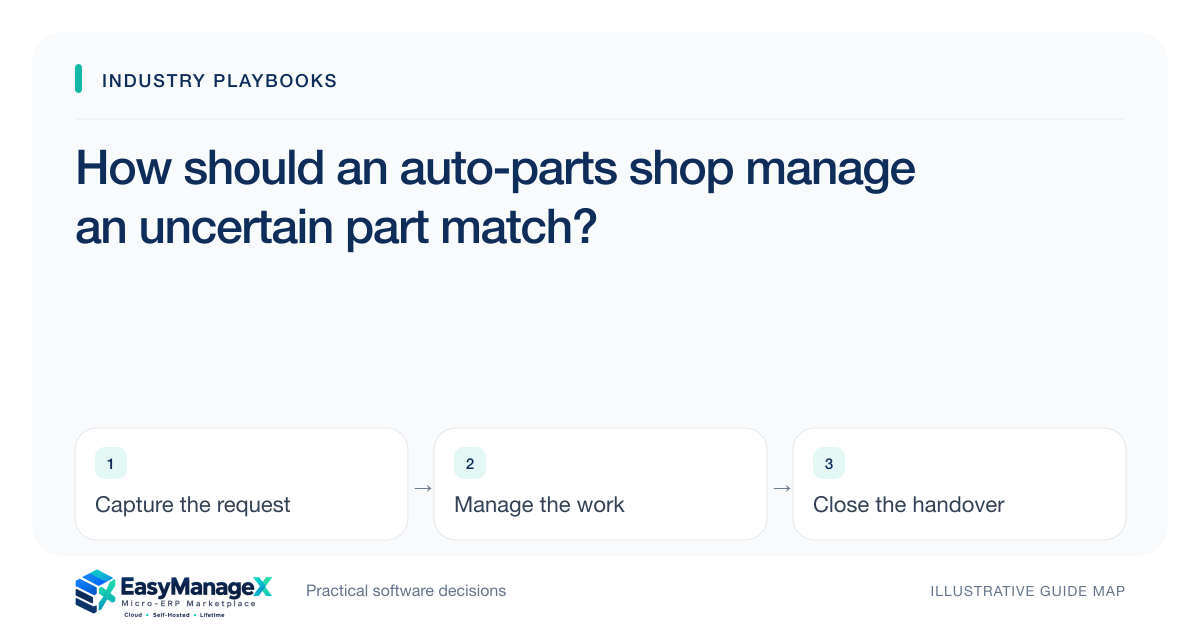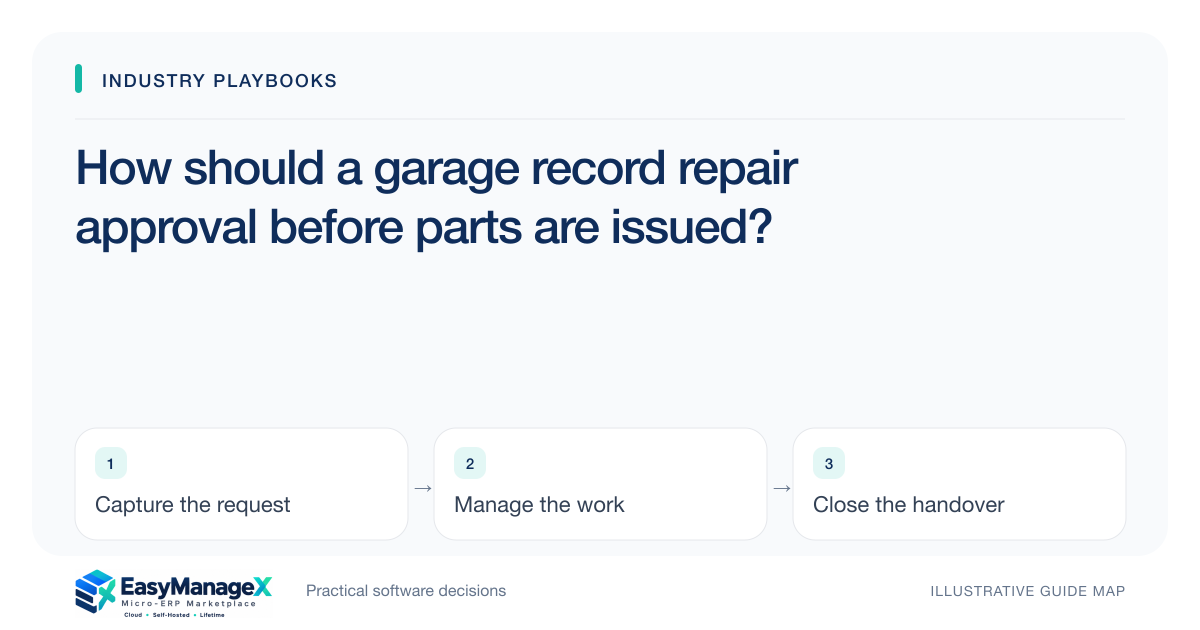
A garage should keep the reported concern, assessment proposal and authorised work scope as separate linked records. Before issuing parts, confirm the relevant job instruction and approving owner under the garage’s process. Record parts issued and returned against that job, and preserve later scope changes so collection staff can explain the work actually authorised and recorded.
- Customer symptoms and approved work are different records.
- Parts movements need a job and scope reference.
- Collection staff should see the confirmed work history.
Capture intake without inventing a diagnosis
Record the vehicle identifier, customer-reported concern and relevant intake observations. Keep the customer’s words distinguishable from a technician’s assessment. A counter entry should not become a confirmed technical diagnosis merely because it appears in the job’s first description field.
Use a job reference that links assessment, approval and workshop movements. Where identifying information is incomplete, create an owned exception. Guessing the vehicle record from a familiar customer name can connect parts and communications to the wrong job.
Define the proposed and authorised scope
An assessment proposal needs an identifiable version and responsible technician or service owner. The customer or other authorised party’s decision should refer to that scope. If further work is later identified, create a new decision rather than treating the first approval as unlimited authority.
Technical repair methods and readiness decisions belong to the garage’s qualified personnel and established procedures. The operational register should preserve their outcomes and references. It should not prescribe a repair or infer that a vehicle is ready from a completed administrative checklist alone.
Link parts to approved job work
The parts counter should see the job reference and the relevant authorised instruction before issuing material. Record part identity and quantity, with returns or unused items linked back to the job. An invoice received into stock does not explain which repair actually consumed the parts.
If a proposed part changes, preserve the review and authorised decision. The workshop and parts owner need the same confirmed reference. Avoid silently replacing the part description after issue, because staff may later need to explain what was physically handed over.
Illustrative scenario: assessment reveals additional work
Imagine a garage job with one authorised work item. During assessment, the technician identifies another matter for review. The service owner records a separate proposal and obtains the appropriate decision before the parts counter issues material for that additional scope.
Unused parts from the first item return with a linked movement, and collection staff see the recorded sequence. This illustrative scenario addresses approvals and inventory handoffs; it does not provide mechanical advice, safety findings or a universal rule for customer charging.
Keep waiting jobs and completion distinct
Use queues that explain why a job is waiting: customer decision, parts availability, external service or authorised technical review. Assign a next action and owner. A general waiting status can lead staff to chase the wrong person while the real decision remains elsewhere.
Before collection, reconcile recorded scope, completed work references and unresolved exceptions. A commercial record and a technical release may require different confirmation. Preserve those decisions so the person speaking to the customer does not infer readiness from a payment or stock issue alone.
Evaluate an added-scope request
Demonstrate an intake, initial authorisation, parts issue and later proposal. Ask how the counter sees which parts can be issued and how collection staff identify unresolved work. Include a returned part and an incorrectly linked vehicle corrected with history.
EasyManageX concepts are illustrative. Verify approval scope, parts references and role boundaries using anonymised garage jobs. Start with a workflow the service desk and workshop can maintain consistently before relying on wider reports to explain cost, timing or customer communication.
Your working checklist
- Separate reported symptoms from assessment outcomes.
- Use stable vehicle and job references.
- Identify each proposed work-scope version.
- Link approvals to the relevant instruction.
- Record parts issues and returns by job.
- Test an added-scope proposal before collection.
Common questions
Does intake authorise every later repair?+
Record the scope authorised through the garage’s established process and applicable agreements. Intake captures the concern and begins the job; it should not silently become unlimited permission for later work. Keep additional proposals linked to their decisions and communicate the confirmed outcome through the appropriate owner.
What should the parts counter verify?+
Check the job identity and the relevant authorised work reference under your process. Record part and quantity movements, including returns. The counter should not have to infer approved scope from a customer symptom or assume that an earlier issue authorises any later substitution.
Can paid status mean ready for collection?+
Payment is a commercial event, while completed work and authorised release can require separate confirmation. Keep those states linked but distinguishable. Collection staff need the garage’s confirmed outcome and unresolved exceptions rather than a software assumption that a payment establishes technical readiness.
Sources and further reading
These primary references explain relevant concepts. Our scenarios and working checklists are original, illustrative guidance.
- Microsoft Learn: Inventory on-hand list
Further reading on item quantities and inventory dimensions; relevant to parts issues and returns linked to an authorised garage job.
Published by EasyManageX as practical, AI-assisted guidance. Examples are illustrative. Confirm software capabilities, licence terms and project-specific requirements before committing. Read our editorial policy.