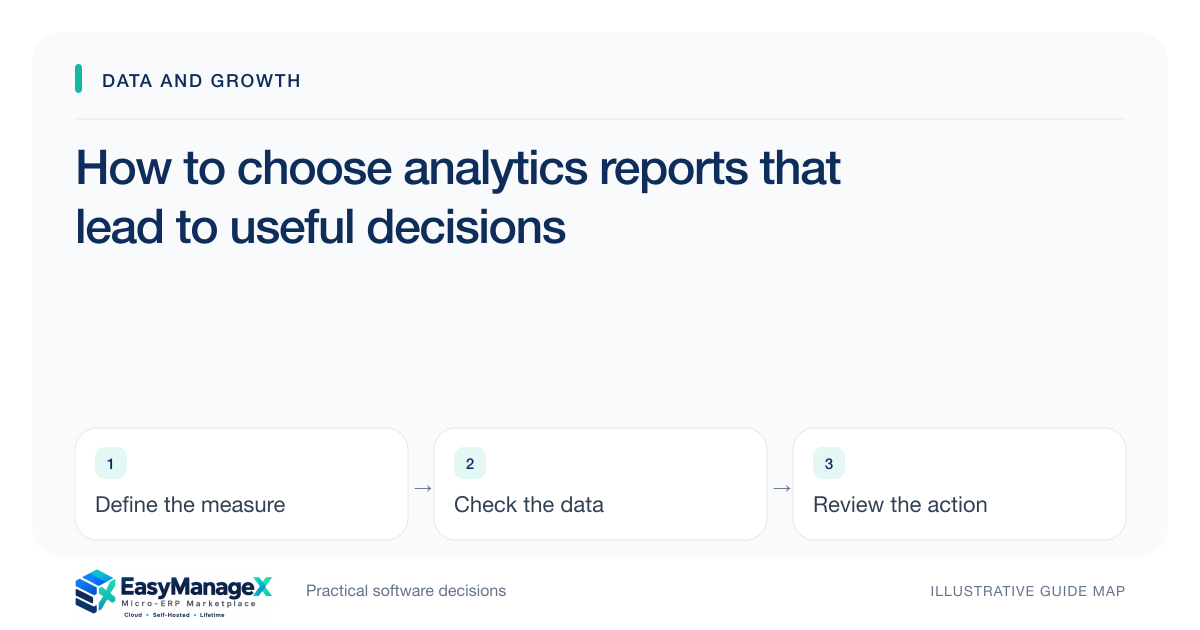
How to choose analytics reports that lead to useful decisions
Choose reports by decision, metric definition, owner and review cadence so dashboards help teams act on exceptions instead of accumulating attractive charts.
Read the guide
Browse every article, or use the knowledge hub to choose a topic and decision stage.
Choose reports by decision, metric definition, owner and review cadence so dashboards help teams act on exceptions instead of accumulating attractive charts.
Read the guide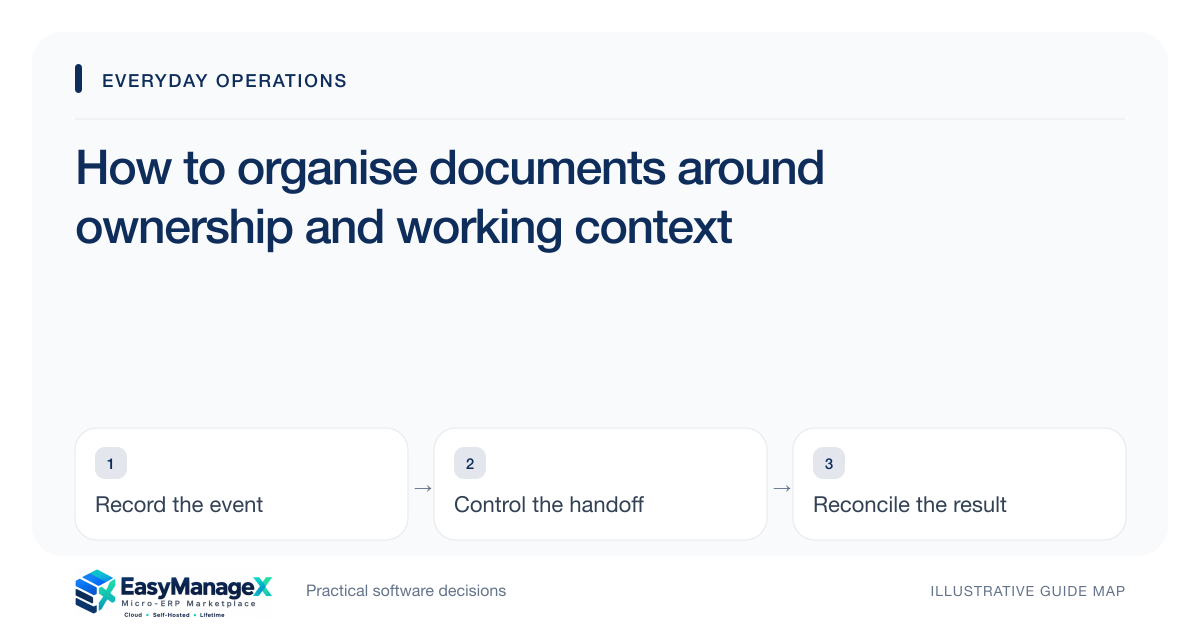
Build a practical document register with owners, versions, linked work records and access rules so staff can find the right information without relying on filenames.
Read the guide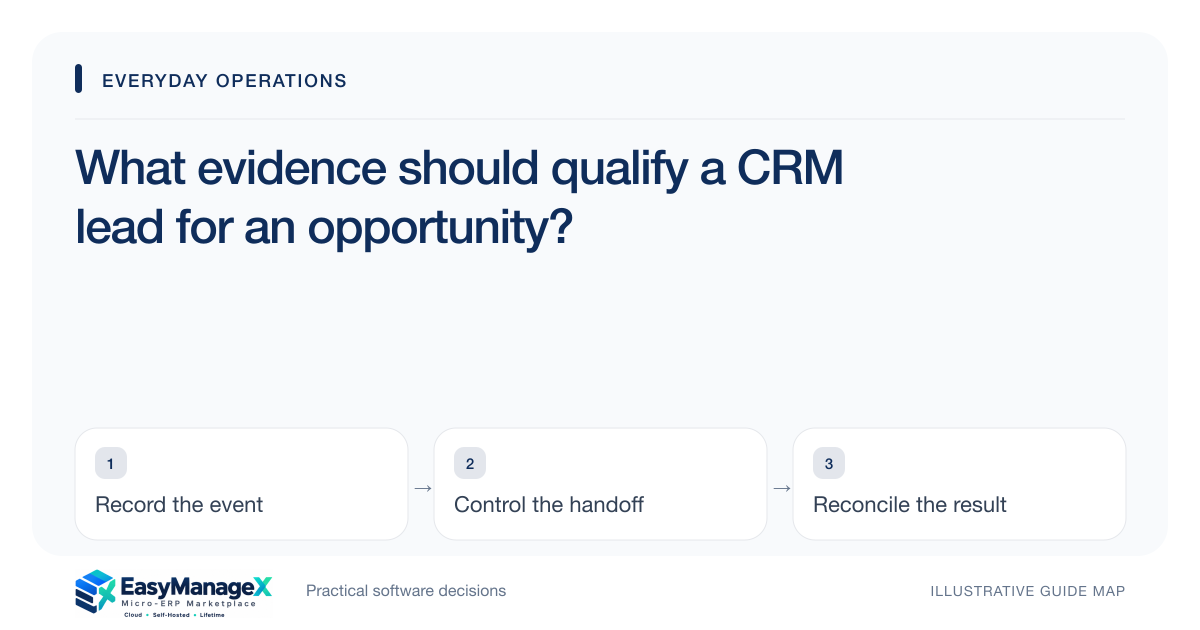
Qualify CRM leads using the requested outcome, decision process, timing and next commitment, with practical handling for uncertain budgets and incomplete enquiries.
Read the guide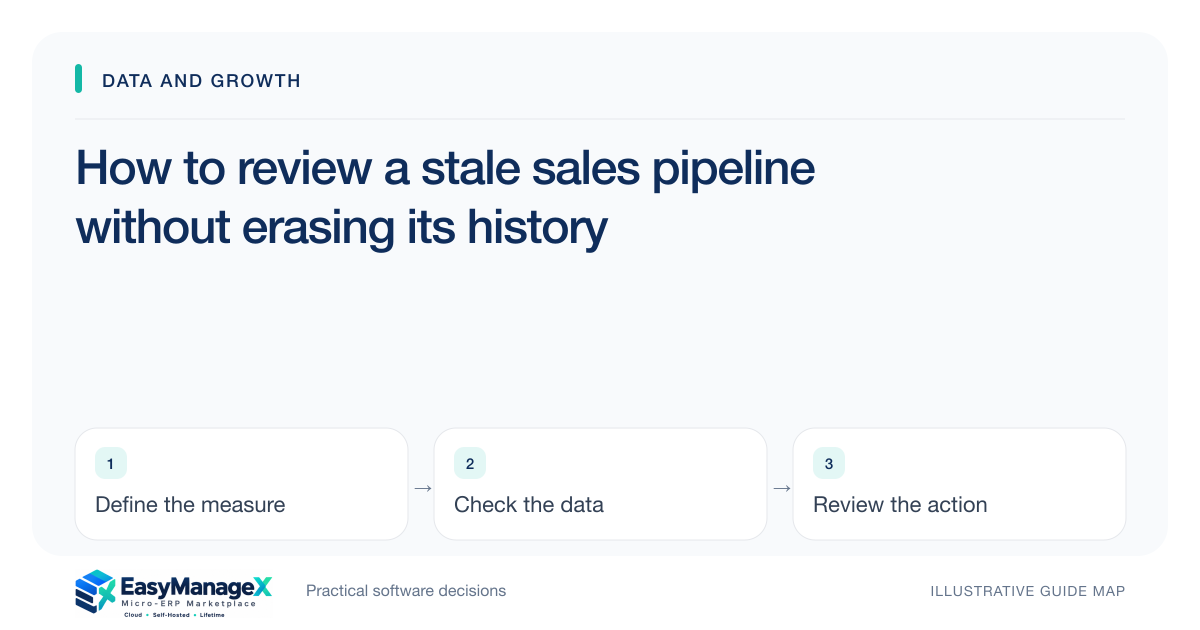
Review stale CRM opportunities using meaningful activity, next commitments and stage evidence, with clear choices to revive, pause, close or retain a record.
Read the guide
Plan count scope, movement cutoffs, recounts and adjustment review so stock reconciliation explains differences instead of simply replacing the ledger balance.
Read the guide
Define vendor onboarding evidence, approval authority and change verification so supplier records stay attributable as purchasing and payment details evolve.
Read the guide
Review missing punches, overnight shifts, roster changes and attendance corrections against the assigned schedule, with explicit evidence and review boundaries.
Read the guide
Define confirmation, late-arrival, cancellation and no-show decisions with practical follow-up rules that protect scheduling capacity and explain exceptions.
Read the guide
Build support handoffs around the current issue, evidence, customer promises and receiving-owner acceptance so reassignment does not leave requests without action.
Read the guide
Review upcoming membership renewals using accepted service periods, payment evidence, plan changes and contact outcomes without confusing reminders with renewal decisions.
Read the guide
Define delivery evidence by shipment, recipient and accepted quantities, with explicit handling for damage, partial delivery and failed attempts at the destination.
Read the guide
Control document revisions with accepted versions, change descriptions and use boundaries so projects and purchasing teams do not act on unreviewed amendments.
Read the guide
Assess requested project changes against accepted scope, cost, dependencies and timing before commitment, with clear decisions and revised delivery boundaries.
Read the guide
Choose transparent cost allocation bases, periods and review rules so shared expenses support decisions without presenting arbitrary splits as precise project economics.
Read the guide
Create a report definition dictionary covering events, periods, populations, calculations, exclusions and owners so teams can reproduce and explain business measures.
Read the guide
Clean item identity, variants, selling units and legacy references before inventory import so similar descriptions and inconsistent conversions do not corrupt stock views.
Read the guide
Review duplicate CRM contacts using verified identity, organisation relationships and activity history so cleanup preserves legitimate people and opportunity context.
Read the guide
Compare business periods with consistent populations, event dates and definitions, while explaining corrections, new branches and incomplete periods before drawing conclusions.
Read the guide